lunes, 27 de mayo de 2013

JAL GROU MONTHLY TRAFFIC DATA


JAL Group Monthly Traffic Data - April 2013 
JAL Group today announced its traffic data for@the month of April 2013. Please refer to the tables below.
1)    JAL Group International Passenger Traffic Data - FY2013 
Month
Pax
y.o.y(%)
RPK (000's)
y.o.y(%)
ASK (000's)
y.o.y(%)
L/F(%)
APR - 13
578,279
99.8
2,582,823
104.5
3,698,245
104.5
69.8
MAY - 13


JUN - 13


FY13 1st Q
578,279
99.8
2,582,823
104.5
3,698,245
104.5
69.8
JUL - 13


AUG - 13


SEP - 13


FY13 2nd Q
OCT - 13


NOV - 13


DEC - 13


FY13 3rd Q
JAN - 14


FEB - 14


MAR - 14


FY13 4th Q
TOTAL
578,279
99.8
2,582,823
104.5
3,698,245
104.5
69.8
1.2) Monthly International Passenger Route Traffic Data - April 2013 
Route
Pax
y.o.y(%)
RPK (000's)
y.o.y(%)
ASK (000's)
y.o.y(%)
L/F(%)
FY11
L/F(%)
Transpacific
118,627
101.7
920,564
105.0
1,294,447
106.2
71.1
71.9
Europe
47,366
98.5
445,296
98.2
631,669
94.4
70.5
67.8
S.E.A
244,253
111.9
876,379
115.2
1,205,422
109.4
72.7
69.1
Oceania
11,007
105.3
85,133
105.8
136,760
114.5
62.2
67.4
Guam
10,469
92.2
26,330
91.4
35,748
89.1
73.7
71.8
Korea
62,733
84.7
71,578
86.7
104,328
91.0
68.6
72.0
China
83,824
83.2
157,543
83.4
289,847
105.5
54.4
68.7
Total
578,279
99.8
2,582,823
104.5
3,698,245
104.5
69.8
69.9
2)   JAL Group Total Domestic Passenger Traffic - FY2013 
Month
Pax
y.o.y(%)
RPK (000's)
y.o.y(%)
ASK (000's)
y.o.y(%)
L/F(%)
APR - 13
2,309,460
101.8
1,760,896
100.6
3,077,056
102.9
57.2
MAY - 13


JUN - 13


FY13 1st Q
2,309,460
101.8
1,760,896
100.6
3,077,056
102.9
57.2
JUL - 13


AUG - 13


SEP - 13


FY13 2nd Q
OCT - 13


NOV - 13


DEC - 13


FY13 3rd Q
JAN - 14 


FEB - 14 


MAR - 14


FY13 4th Q
TOTAL
2,309,460
101.8
1,760,896
100.6
3,077,056
102.9
57.2
3)   JAL Group Cargo Traffic Data - FY2013 
Month
International
Domestic
Cargo
Mail
Cargo
Mail
Ton
y.o.y(%)
Ton
y.o.y(%)
Ton
y.o.y(%)
Ton
y.o.y
(%)
APR - 13
20,773
100.9
2,384
111.3
31,751
101.4
2,278
104.7
MAY - 13


JUN - 13


FY13 1st Q
20,773
100.9
2,384
111.3
31,751
101.4
2,278
104.7
JUL - 13


AUG - 13


SEP - 13


FY13 2nd Q
OCT - 13


NOV - 13


DEC - 13


FY13 3rd Q
JAN - 14


FEB - 14


MAR - 14


FY13 4th Q
TOTAL
20,773
100.9
2,384
111.3
31,751
101.4
2,278
104.7

DAVID GILLAMÓN - USCA


Fuente USCA / CANARPRESS

EMERGENCIA EN HEATHROW AIRPORT


Passenger video of the British Airways plane, A-319 with 75 passenger, as it makes an emergency landing at Heathrow Airport.

jueves, 23 de mayo de 2013

BOEING 747-400 TAKEOFF FROM HONG KONG AIRPORT


El Aeropuerto Internacional de Hong Kong fue inaugurado en junio de 1988, y es junto al gran río artificial de Libia uno de los dos proyectos de ingeniería más costosos de la historia, llevado a cabo por Foster and Partnerts. 

Tiene capacidad para trasladar hasta 35 millones de pasajeros al año y es el hub principal para Cathay Pacific, Dragonair, Hong Kong Express Airways, Hong Kong Airlines, Oasis Hong Kong Airlines y Air Lines Hong Kong.

Código IATA : HKG
Código OACI : VHHH
Elevación : 28 pies (9 metros msnm)
Coordenadas : 22º 18' 32" N  113º 54' 52" E
PISTAS : 07R / 25L y 07L / 25R ambas de 3.800 metros.


RV: ONEWORLD AIRLINE ALLIANCE


oneworld airline alliance enters events and conventions travel market
  • Big benefits for organisers and attendees of conferences, events and exhibitions
  • Attractive discounts on flights
  • Easy-to-use online booking and management systems
  • Travel on a collection of the world's leading airlines serving 850 destinations
oneworld®, the premier global airline alliance, today unveiled a new, one-stop, easy-to-use service to meet the travel needs for conventions, conferences, exhibitions and special events - offering attractive discounts on flights across a network spanning 850 destinations globally served by some of the world's leading airlines.
 
For event and convention organisers, oneworld events provides: 
  • An efficient and user-friendly centralised process, with one set of terms and conditions covering travel on all oneworld member airlines that can be ready for acceptance just days after submitting the online request form.
  • Discounted flights for attendees plus the chance for organisers to earn and redeem credits for travel on participating oneworld member airlines.
  • Simple online access to real-time management reports 24/7 to help meet attendees' travel needs.
  • A ready-to-use oneworld promotional toolkit to build attendee awareness.
 
For attendees, oneworld events offers:
  • Attractive discounts on flights for attendees and one travel companion each, on oneworld member airlines, which together serve 850 destinations in more than 150 countries around the globe.
  • A user-friendly booking tool that will display the most convenient flights and multiple fare options from hundreds of departure points all over the world to the event or convention location.
  • Travel on a collection of some of the world's leading airlines.
  • Round-the-clock support, with the oneworld events helpdesk ready to help via email or phone.
  • All usual privileges and benefits to members of any oneworld member airline frequent flyer programme - including the ability to earn miles/points and, for top tier cardholders and one companion each, to use any of the 550 airport lounges provided by the alliance's airlines the world over. Attendees who are not yet members can sign-up before they depart and then receive their benefits and privileges on their way to or from their convention of event.
 
oneworld events is aimed at conferences, conventions, exhibitions and special events targeting a minimum of 500 international attendees travelling from at least two regions.  Requests are accepted as early as five years in advance and up to three months prior to the event date.
 
Industry data indicates that 3.5 million delegates attend these kinds of conferences and events around the world every year, spending around US$ 1.5 billion on air travel.
 
The oneworld alliance brings together leading airlines from around the world - airberlin, American Airlines, British Airways, Cathay Pacific Airways, Finnair, Iberia, Japan Airlines, LAN Airlines, Malaysia Airlines, Qantas, Royal Jordanian and S7 Airlines.
 
Besides these 12 full member airlines, oneworld also features around 30 "affiliate" members, expanding its network further.   They include Austria's NIKI, China's Dragonair, US regional American Eagle, South Africa's Comair, Denmark's SUN-AIR, transatlantic carrier OpenSkies, LAN Argentina, LAN Ecuador, LAN Peru and, soon, LAN Colombia.
 
oneworld is currently undergoing one of its biggest expansion drives in its history.  Lining up to join oneworld in the year ahead are:
  • Qatar Airways, one of the world's most highly regarded and fastest growing carriers, and the first of the Gulf Big Three airlines to sign for any global airline alliance.
  • SriLankan Airlines, which will be the first carrier from the Indian sub-continent to join any of the global airline alliances.
  • TAM Airlines, the leading airline in Latin America's biggest economy, Brazil.
 
In addition, US Airways, one of the world's largest airlines, is planning to move into oneworld, through its proposed merger with American Airlines, subject to approvals.
 
With the addition of its members elect, the oneworld network will soon grow to almost a thousand destinations in nearly 160 countries served by a combined fleet of some 3,300 aircraft operating more than 13,000 daily departures and carrying 480 million customers a year.
 
oneworld events was unveiled today at IMEX, in Frankfurt - the world's biggest annual convention for the conferences, conventions, exhibitions and events industry.
 
Launching the product, oneworld Director Sales José María Alvarado said: "Uniquely among global airline alliances, oneworld counts all four of the top country markets for big global gatherings as homes to member airlines - USA, Germany, Spain and UK.  But virtually wherever you are holding an event or exhibition, oneworld member airlines will be able to get you there.
 
"This makes oneworld an obvious choice as a travel partner for most of the world's big conventions and events.  Our new oneworld events programme is both simple and speedy to use, with very attractive discounts on published fares."

About oneworld
oneworld member airlines work together to deliver consistently a superior, seamless travel experience, with special privileges and rewards for frequent flyers, including earning and redeeming miles and points across the entire alliance network. Top tier cardholders (Emerald and Sapphire) enjoy access to some 550 airport lounges. The most regular travellers (Emerald) can also use fast track security lanes at select airports and extra baggage allowances.
 
oneworld is currently the holder of three leading international awards for airline alliances - named the Best Airline Alliance by Global Traveler in its GT Tested Reader Survey 2012 Awards for the third year running, the World's Leading Airline Alliance in the 2012 World Travel Awards for the 10th year running, and Australian Business Traveller Best Airline Alliance in 2012 for the second year running.


BTS RELEASES FEBRUARY 2012 U.S. AIRLINE TRAFFIC DATA


System Passengers Down 1.2% from February 2012
 

The U.S. Department of Transportation's Bureau of Transportation Statistics (BTS) reported today that U.S. airlines carried 52.5 million scheduled systemwide passengers in February 2013, 1.2 percent less than in February 2012. The systemwide decrease was the result of a 1.5 percent decrease in the number of domestic passengers (45.7 million) and a 0.7 percent increase in international passengers (6.8 million). 


BTS, a part of the Department's Research and Innovative Technology Administration, reported that U.S. airlines carried 0.2 percent more total system (domestic + international) passengers during the first two months of 2013 (107.8 million) than during the same period in 2012. Domestically, U.S. airlines carried 93.5 million passengers, unchanged from 2012. Internationally, they carried 14.3 million passengers, up 1.6 percent from 2012. See Tables 2, 8 and 14 of Air Traffic Press Releases for previous-year data. 

The system load factor of 79.2 percent, the domestic load factor of 81.0 percent and the international load factor of 75.8 percent were record highs for the month of February. 

Load Factor and Capacity 

The February system and domestic load factor records topped the previous highs set in February 2012 following year-to-year capacity cuts for both system (-3.2 percent) and domestic (-2.6 percent). In February, for the third consecutive month, international capacity declined from the same month of the previous year. The capacity decline combined with an RPM increase from February 2012 resulted in a record international load factor for the month of February, surpassing the previous high set in February 2010. Load factor is a measure of the use of aircraft capacity that compares RPMs as a proportion of ASMs. See Tables 1, 7 and 13 of Air Traffic Press Releases for previous-year data. 

Top Airlines 

In February, Delta Air Lines carried more system passengers than any other U.S. airline.  Southwest Airlines carried the most domestic passengers. United Airlines carried the most international passengers. The top 10 U.S. airlines in terms of number of passengers carried 80.4 percent of systemwide passengers, up from 79.7 percent carried by the U.S. airlines that were in the top 10 in February 2012.

See Air Traffic Release for summary tables and additional data. Additional traffic data can be found on the BTS Airlines and Airports page.  Click on a link in the Quick Links box on the right.  For more historical data, see Traffic on the BTS website.  


PILOTOS DE AVIACIÓN A DESTAJO


Inviertes un capital para conseguir la Licencia de Piloto Comercial y para ir acumulando horas de vuelo hasta que consigas un empleo. Según donde lo encuentres hasta tendrás que encargar  un uniforme (400/500 euros) y, el 'pajarito' que te contrate como 'autónomo' te explicará a través de su 'departamento de personal' que te has de pagar el alojamiento en hoteles y el transporte que careces de pensiones o jubilación y que tu remuneración estará en función de 'a mayor horas de vuelo, mayor remuneración', es decir estarás presionado para volar estés o no en las mejores circunstancias para hacerlo.

Esto presuntamente ocurre, según mis amigos de FI, en una 'destacada' compañía de «low cost», cuyo gerente advierte a los pilotos que "si denuncian estos hechos ante la Autoridad de Aviación Civil de Irlanda, serán automáticamente despedidos.

Por todo ello, hay quien asegura que esa «low cost» está dejando su suerte en manos de factores humanos cuando emplea pilotos como un señor de la guerra emplea mercenarios.

La pregunta, desde el punto de vista de los usuarios sería: ¿sabemos con quien volamos y valoramos los riesgos?

lunes, 20 de mayo de 2013

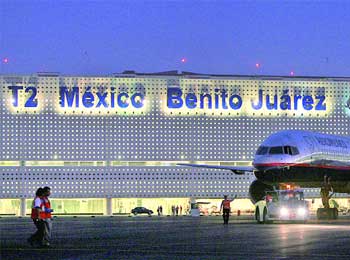
A320 DESPEGANDO DEL AEROPUERTO INTERNACIONAL CIUDAD DE MÉXICO


VÍDEO DE: INTERJET
Código IATA : MEX
Código OACI : MMMX
Coordenadas : 19º 26' 10" N - 99º 04' 19" O
Elevación : 7.316 pies (2.230 m.)
Pistas : 05R/23L de 3.900 metros y 05L/23R de 3.952 metros

Estadisticas 2012

Movimiento de pasajeros : 29.491.553
Pasajeros nacionales : 19.678.117
Pasajeros internacionales : 9.812.436
Operaciones aéreas : 350.032


AEROPUERTOS DE MÉXICO SIN CERTIFICACIÓN


 A pesar de su importancia en la aeronáutica civil, los aeropuertos de ciudad de México, Cancún, Monterrey y Guadalajara, carecen de certifdicación para vuelos internacionales.

"Sólo siete de los 63 que conforman el sistema nacional están certificados" señala un reporte de la Organización Internacional de Aviación Civil (OACI).


El presidente de la Cámara Nacional de Aerotransportes, Guillermo Heredia, manifestó recientemente que sólo están certificados los aeropuertos de Querétaro, Toluca, Loreto, Guaymas, Ciudad del Carmen, Campeche y Ciudad Obregón.

Consideró el manifestante que la principal razón por la que los aeropuertos no se han certificado es por el costo y porque no es obligatorio.


miércoles, 15 de mayo de 2013

BARAJAS : 80 AÑOS DEL PRIMER VUELO COMERCIAL


EL 15 DE MAYO DE 1933, ATERRIZÓ EL BARAJAS EL FOKKER VII / 3M


Ocho décadas después de que un trimotor de la compañía LAPE (Lineas Aéreas Postales Españolas) aterrizara en el entonces denominado AEROPUERTO NACIONAL DE MADRID, Barajas ha alcanzado su ochenta cumpleaños con decenas de compañías volando a casi 200 destinos en 65 países, dando servicio a más de 65 millones de viajeros al año.


Fue la compañía LAPE, más tarde se convertiría en IBERIA, la que inició los vuelos regulares a Barcelona, con una tarifa de 150 pesetas, y a Sevilla por 125. En el Fokker VII podían viajar 8 pasajeros y dos tripulantes.

En el año 1933 operaron un total de 378 vuelos que transportaron a 2.873 pasajeros. No había ni terminal ni pistas asfaltadas, si había un hangar de 90x300 metros, un edificio para pruebas de motores y tres depósitos de gasolina con 100.000 litros cada uno y otro para aceite.

AIRBUS A380 IN-FLIGHT ECONOMY EXPERIENCE ON EMIRATES AIRLINES | DXB - JFK

martes, 14 de mayo de 2013

SALIÓ DEL TALLER DE PINTURA EL AIRBUS A350


El primer ejemplar del AIRBUS A350, orgullo de la aeronáutica europea, salió del taller de pintura y fue presentado ayer en Toulouse.


La empresa europea ha roto por primera vez la tradición de ceremonias espectaculares. El pintado del avión ha sido realizado en siete días y es la continuación de la verificación del instrumental de vuelo realizado anteriormente.

La campaña de ensayos en vuelo comenzará entre junio y julio y la primera entrega será a finales de 2014.

lunes, 13 de mayo de 2013

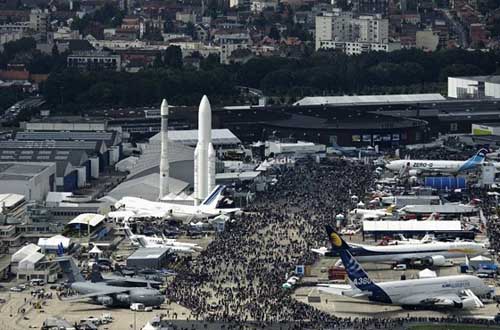
INTERNATIONAL PARIS AIR SHOW - SALÓN DE LE BOURGET


Cada dos años se celebra el Salón de Le Bourget, conocido también como el International París Air Show, una exhibición que tiene lugar en el aeropuerto de Le Bourget, en las proximidades de París. Esta es una de las grandes citas de la industria aeropespacial, y que en cada edición se pueden ver los últimos adelantos en cuanto a aviones, helicópteros y en general todo tipo de aeronaves y vehículos aéreos.

 Aunque durante los cuatro primeros días del evento el acceso está restringido a los profesionales del sector, desde el 21 de junio será posible para todo el mundo acceder al salón de Le Bourget.

Por otra parte, se celebrarán distintas exhibiciones de vuelo, y se podrán visitar todas las instalaciones, ya que están incluido el precio de la entrada.


Este año 2013, el International París Air Show cumple su edición número 50, y nada tienen que ver los modelos y prototipos que se muestran en la actualidad con los que inauguraron la muestra, hace ya más de un siglo.

Desde sus orígenes y pese a que no se ha celebrado con regularidad, esta muestra ha sido uno de los referentes mundiales para la aeronáutica y la ingeniería espacial, condición que mantiene en nuestros días.

El aeropuerto de Le Bourget fue creado en 1915 y de allí partieron los primeros vuelos comerciales con destino a Bruselas y Londres así como las expediciones de Nungesser, Coly y Lindbergh. 

También se puede visitar el Museo del Aire y del Espacio, dependiente del Ministerio de Defensa. En este Museo hay muchísimo que ver. Una gran galería nos muestra los principios de la aviación, una sala de Globos, salas de maquetas, con modelos a escala de distintos aviones, y un homenaje a los ases de la aviación de los años 1914 a 1918


Tras las visitas aeronáutica, se suele visitar el antiguo Cabaret des Assassins, situado en un edificio de apariencia rústica, y que ahora se denomina Au Lapin Agile, está situado en el número 22 de la Rue des Naules, en el barrio de Montmatre, y funciona de martes a domingo desde las 21 horas hasta las 2 de la madrugada.
Este cabaret adquirió popularidad entre artistas e intelectuales parisinos del siglo XX

viernes, 10 de mayo de 2013

OACI Y AEROPUERTOS DE RIESGO

Autoridades de aviación de la OACI están identificando los aeropuertos con riesgo en América del Norte, Centroamérica y el Caribe, según anuncia la directora de la Oficina Regional de la Organización Civil Internacional (OACI).

La institución recibió información de los operadores norteamericanos que vuelan en la región acerca de los aeropuertos y aeródromos señalados como peligrosos.

El Grupo Regional de Seguridad Operacional de la Aviación Panamericano, el cual forma parte de la OACI, analiza las áreas principales con riesgo de seguridad, tanto las pistas de los aeropuertos y las pérdidas de control de vuelo y en tierra.

miércoles, 8 de mayo de 2013

NTSB Safety Recommendations A-13-007 through -015


AVIATION

NTSB Issues Nine New Safety Recommendations as a Result of Its Investigation of the 8/26/2011 Crash of a Eurocopter AS350 B2 Near Mosby, Missouri
May 6, 2013
The National Transportation Safety Board Issues the Following Recommendations to the Following Organizations:

To the Federal Aviation Administration:

Prohibit flight crewmembers in 14 Code of Federal Regulations Part 135 and 91 subpart K operations from using a portable electronic device for nonoperational use while at their duty station on the flight deck while the aircraft is being operated. (A-13-007)

Require all 14 Code of Federal Regulations Part 121, 135, and 91 subpart K operators to incorporate into their initial and recurrent pilot training programs information on the detrimental effects that distraction due to the nonoperational use of portable electronic devices can have on performance of safety-critical ground and flight operations. (A-13-008)

Require all 14 Code of Federal Regulations Part 121, 135, and 91 subpart K operators to review their respective general operations manuals to ensure that procedures are in place that prohibit the nonoperational use of portable electronic devices by operational personnel while in flight and during safety-critical preparatory and planning activities on the ground in advance of flight. (A-13-009)

Inform pilots of helicopters with low inertia rotor systems about the circumstances of this accident, particularly emphasizing the findings of the simulator flight evaluations, and advise them of the importance of simultaneously applying aft cyclic and down collective to achieve a successful autorotation entry at cruise airspeeds. (A-13-010)

Revise the Helicopter Flying Handbook to include a discussion of the entry phase of autorotations that explains the factors affecting rotor rpm decay and informs pilots that immediate and simultaneous control inputs may be required to enter an autorotation. (A-13-011)

Require the installation of a crash-resistant flight recorder system on all newly manufactured turbine-powered, nonexperimental, nonrestricted-category aircraft that are not equipped with a flight data recorder and a cockpit voice recorder and are operating under 14 Code of Federal Regulations Parts 91, 121, or 135. The crash-resistant flight recorder system should record cockpit audio and images with a view of the cockpit environment to include as much of the outside view as possible, and parametric data per aircraft and system installation, all as specified in Technical Standard Order C197, "Information Collection and Monitoring Systems." (A-13-012)

Require all existing turbine-powered, nonexperimental, nonrestricted-category aircraft that are not equipped with a flight data recorder or cockpit voice recorder and are operating under 14 Code of Federal Regulations Parts 91, 121, or 135 to be retrofitted with a crash-resistant flight recorder system. The crash-resistant flight recorder system should record cockpit audio and images with a view of the cockpit environment to include as much of the outside view as possible, and parametric data per aircraft and system installation, all as specified in Technical Standard Order C197, "Information Collection and Monitoring Systems." (A-13-013)


To Air Methods Corporation:

Expand your policy on portable electronic devices to prohibit their nonoperational use during safety-critical ground activities, such as flight planning and preflight inspection, as well as in flight. (A-13-014)

Revise company procedures so that pilots are no longer solely responsible for nonroutine operational decisions but are required to consult with the Air Methods Operational Control Center for approval to accept or continue a mission when confronted with elevated risk situations, such as fuel-related issues and unplanned deviations. (A-13-015)


CERTAMENES AERONÁUTICOS


jueves, 2 de mayo de 2013

AVIÓN COMERCIAL A PUNTO DE CHOCAR CON OVNI


 Un Airbus A-320 estuvo a punto de chocar contra un Objeto Volador No Identificado (OVNI) el pasado 2 de diciembre a 13 millas  de Glasgow (Escocia). y a 1066 metros de altura.

El piloto de la aeronave consideró que el riesgo de colisión fue muy "alto". El avión se disponía a descender en condiciones claras y con sol detrás, cuando los pilotos observaron un objeto a 100 metros de distancia.

El objeto pasó directamente por debajo del avión sin que los tripulantes tuviera tiempo para tomar una acción evasiva. Ambos pilotos coincidieron en que el OVNI era de color azul y amarillo y con una pequeña área frontal y más grande que un globo

El controlador del tráfico aéreo indicó que el radar no detectaba la presencia de otra aeronave.

TRANSCRIPCIÓN DE LO QUE EL PILOTO INFORMÓ AL  CONTROL

A320 : Glasgow Approach A320 C. Acaba de pasar algo por debajo de nosotros bastante cerca,  ¿tienes algo en nuestra zona?

CONTROL : Negativo no tenemos nada en el radar.

A320 : No estoy del todo seguro de lo que era, pero definitivamente era bastante grande y es azul y amarillo.

CONTROL : Entendido ¿tienes una estimación de la altura?

A320 : Tal vez sí, es probable que 400 a 500 pies por encima de ella, así que es probable que cerca de tres mil quinientos metros. No podría decir que dirección iba, pero a la derecha debajo de nosotros.

CONTROL : ¿Sospecha que podría haber sido una vela o algo así?

A320 : Bueno tal vez un ultraligero... simplemente parecía demasiado grande para ser un globo.